Journal / Journal
I Just Need a Break, Which Is Why I Give My Kid a Phone to Play With
It's 5:15 PM, you're exhausted, and the phone comes out. That guilt is real — and so is the hidden truth underneath it: you don't need to be their cruise director. Boredom is brain work.
Thomas O'Connell · July 13, 2026
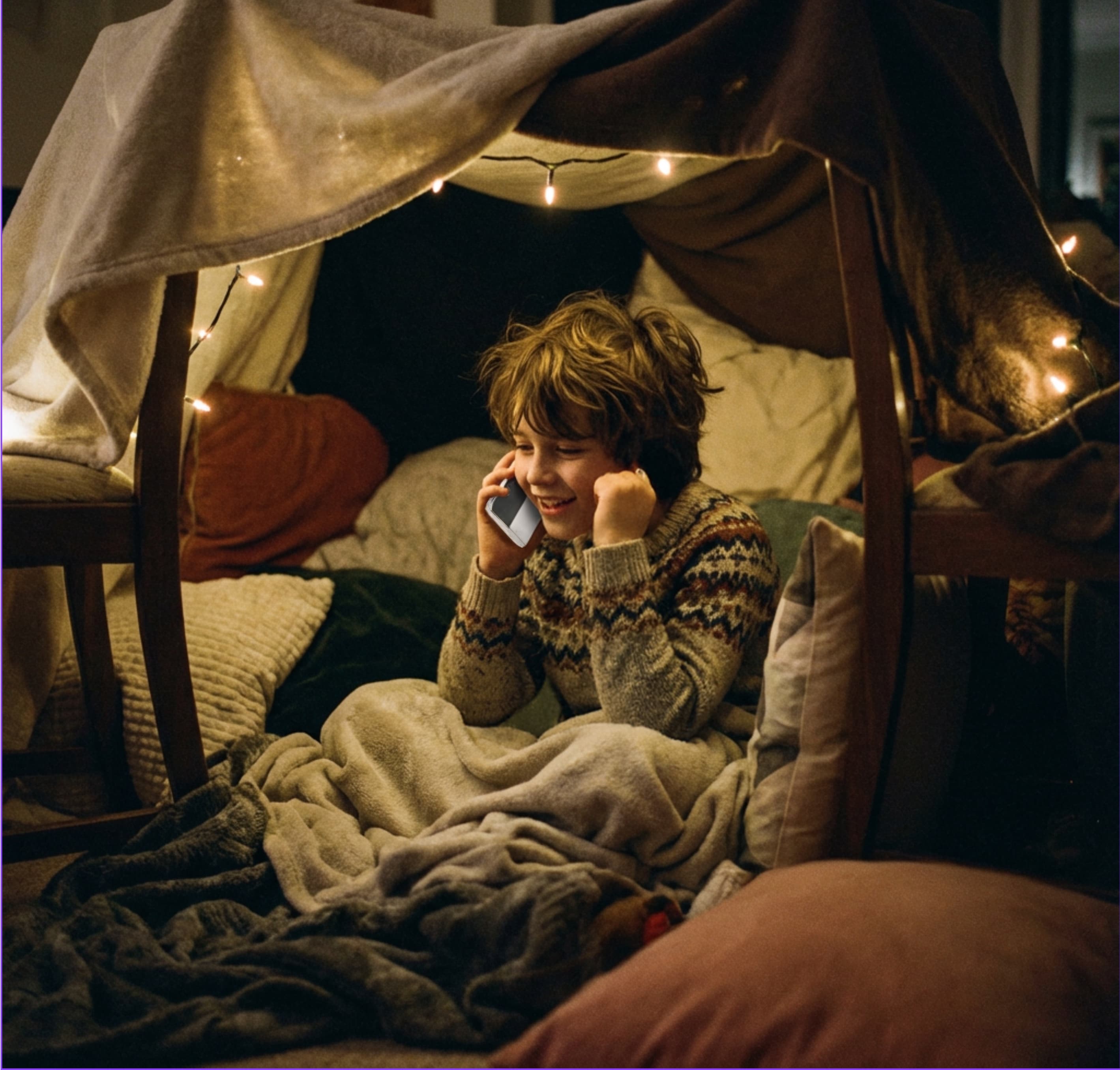
It's 5:15 PM. You've been answering questions, breaking up arguments, and managing emotions since 6:00 AM. You need to chop an onion for dinner, or maybe you just need ten uninterrupted minutes to sit in a quiet room and stare at the wall.
Your child wanders in, dragging their feet: "I'm boooored."
You know what you're "supposed" to do. You're supposed to set up a sensory bin, or suggest a craft, or send them out to explore nature. Instead, you reach into your pocket, hand over your phone, and say, "Here. Just for a few minutes."
Cue the immediate, crushing wave of parenting guilt.
If this sounds familiar, take a deep breath and let yourself off the hook. You are exhausted, and using a screen to buy yourself a moment of sanity is a valid survival tactic. But beneath that guilt is a fascinating, hidden truth that can actually take the pressure off both of you: You do not need to be their cruise director.
In fact, stepping back and letting them be bored is one of the best things you can do for their developing brains.
The "Cruise Director" Trap
Modern parenting comes with a heavy, unspoken rule: if your child is bored, you are failing.
We have been conditioned to intervene at the first sign of under-stimulation. We overschedule their weekends, buy educational toys that light up and sing, and frantically Google "activities for 5-year-olds" the moment there's a lull in the day. We treat boredom like a problem that needs to be solved immediately.
But when we constantly swoop in to rescue our kids from having nothing to do, we accidentally rob them of the space they need to figure out who they are.
The Science: What Happens When Kids Are Bored
When you stop entertaining your child, their brain actually turns on.
Neuroscientists refer to this as the Default Mode Network (DMN). The DMN is a collection of brain regions that activate specifically when we are not focused on an external task (like a screen or a structured game). It is the brain's internal workshop — the place where children process their experiences, imagine future scenarios, and build their sense of self.
The data strongly backs up the benefits of unstructured, under-stimulated time:
It builds emotional regulation: A 2024 study in the Journal of Experimental Child Psychology observed 130 children aged 4 to 6. The researchers found that kids who experience boredom and are allowed to navigate it on their own develop significantly stronger self-regulation and emotional control.
It acts as a catalyst for creativity: A 2024 review published in the Review of Education found that boredom, when combined with low stimulation, is consistently associated with enhanced creative thinking.
It sparks imagination: As Dr. Michael Rich, a pediatrician at Harvard Medical School, notes: "Boredom is the space in which creativity and imagination happen."
A bored child isn't an apathetic child. They are actively seeking meaning and purpose. If we constantly hand them a pre-packaged solution (a screen, a structured game, an outing), they never have to flex the mental muscles required to find that purpose themselves.
Why Letting Them Be Bored Is So Agonizing
If boredom is so great, why don't we do it more? Because the transition phase is awful.
Before a child reaches that magical state of deep, independent play, they have to pass through the "Whine Barrier." They will complain. They will follow you around. They will dramatically flop onto the floor and declare that they have absolutely nothing to play with, despite being surrounded by toys.
It is loud, annoying, and deeply uncomfortable for us as parents. Learning to sit with the discomfort of having nothing to do is a skill, and like any skill, it takes practice.
Tips for Embracing the "Nothing"
You don't have to go cold turkey on screens or suddenly institute a 1980s-style "go outside and don't come back until the streetlights come on" policy. You can build their boredom tolerance gradually.
1. Shift the responsibility
When your child says, "I'm bored," resist the urge to rattle off a list of activities. Instead, sympathize without solving. Try saying: "I know, it's really hard to feel bored. I can't wait to see what you come up with." Then, go back to what you were doing.
2. Provide "loose parts"
Single-purpose toys (like a remote-control car that only does one thing) lose their appeal quickly. Open-ended materials — cardboard boxes, uncooked beans and a spoon, a pile of Legos, or blank paper and tape — invite kids to project their own imagination onto the objects.
3. Start small
If your child is used to constant entertainment, don't expect them to entertain themselves for an hour. Aim for 10 minutes. Tell them you need to do a chore and that they are in charge of their own play until you are done.
4. Let the mess happen
Often, independent play requires making a mess. Building a fort destroys the living room; tinkering with crafts creates paper scraps everywhere. If you want them to occupy themselves, you have to temporarily lower your standards for a spotless house.
5. Forgive the phone moments
Sometimes, you are just touched out, burned out, and running on empty. On those days, handing over the phone so you can drink your coffee in peace isn't a failure — it's triage. Give yourself some grace.
The goal isn't to be a perfect, screen-free parent. The goal is to slowly realize that when your kid is complaining about having nothing to do, you don't have to fix it. You can just smile, step back, and let their brain do the rest.